Fluid Bed Processing Services
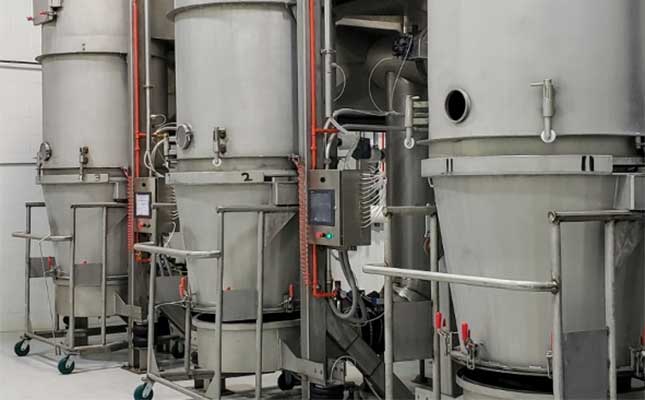
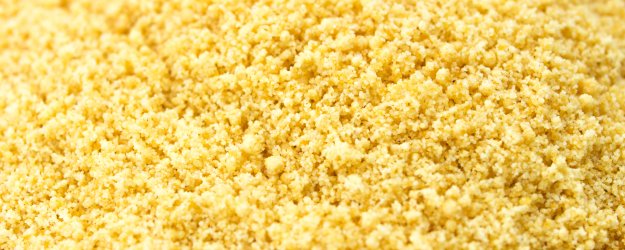
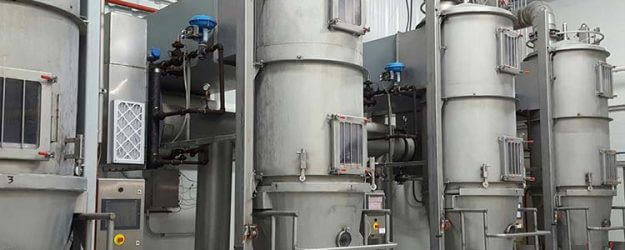
AVEKA provides fluid bed drying, coating, and agglomeration services to gently process, modify, and scale particulate materials from lab testing through production-scale manufacturing.
Why Choose AVEKA for Fluid Bed Processing
Seamless Scale-Up Capabilities: From initial product development to full-scale contract manufacturing, AVEKA helps transition your project from the lab to commercial volume.
Advanced Particle Modification: Production-scale equipment with top spray and Wurster coating capabilities supports drying, coating, and agglomeration for both food-grade and industrial materials.
Precise Process Control: Custom airflow, temperature, spray, and binder profiles help protect fragile or heat-sensitive particulates while supporting stability, flowability, particle size, and performance targets.
Q: What is fluid bed drying?
A: Fluid bed drying fluidizes particles, typically greater than 50 microns, by passing air through a perforated distributor plate. This gentle, even drying method can support fragile materials and achieve specific moisture targets, with drying temperatures ranging from ambient conditions up to 120°C.
Q: What is fluid bed coating?
A: Fluid bed coating applies precise, uniform films to fluidized particles using top spray or Wurster coating methods. Coatings can support controlled release, particle protection, taste masking, moisture barriers, ingredient stabilization, and other performance needs.
Q: What is fluid bed agglomeration?
A: Fluid bed agglomeration, also known as granulation, sprays binder liquid onto a fluidized powder bed to form larger, porous clusters. The process can reduce dusting, improve flowability, limit ingredient segregation, and enhance sinkability or instantization in liquids.
Q: Does AVEKA offer scale-up for fluid bed processing projects?
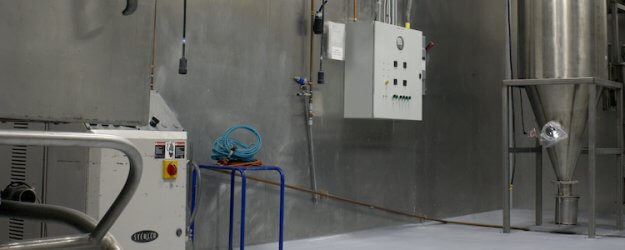
A: Yes. AVEKA supports projects from initial pilot testing through full-scale production, with lab, pilot, food-grade, and industrial production units ranging from 2 L to 320 kg capacity. Extensive pre- and post-processing capabilities contribute to a turnkey experience.
Q: What should be reviewed before starting a fluid bed project?
A: Key considerations include incoming particle size, moisture content, target final moisture or particle size, product grade, temperature requirements, coating thickness, binder system, release profile, and any required certifications.
View our Fluid Bed Drying Flyer
Fluid Bed Drying Services: Top Tier for Precision Moisture Control & Powder Processing
Particle Agglomeration – A Technical How to Guide with Examples Webinar
Fluid Bed Processing: Drying, Agglomeration, Particle Coating Webinar