Air Classification Services
Why Choose AVEKA for Air Classification?
-
Ultra-Sharp Centrifugal Separation: Our advanced air classifiers utilize perfectly balanced aerodynamic drag and centrifugal forces to achieve precise, predictable cuts—specifically engineered to separate fine particles down to the
sub-75 micron range -
Optimized Material Yield & Quality: Whether you need to eliminate oversized grit or strip out unwanted fines, our application-specific system configurations maximize product recovery while maintaining a strict, narrow particle size distribution.
-
Flexible
Lab-to-Production Scaling Request a quote
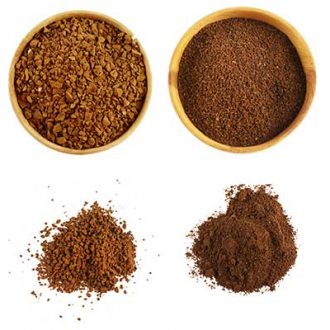
Do you need a tighter particle size distribution? Or remove Coarse or Fine particles?
Q: What does air classification services look like at AVEKA?
A: The AVEKA Centrigual Air Classifier is designed to separate fine particles in the less than 75 micron range.
Q: How does the AVEKA Air Classifier separate particles?
A: This is achieved by utilizing the opposing centrifugal force and aerodynamic drag to sort the particles by mass, resulting in coarse and fine particle fractions.
The Classifier is able to achieve a precise, predictable, and extremely sharp separation at a high solids loading.
Q: How does the AVEKA air classification operate?
A: AVEKA’s Classifier uses the space between the outer edge of the blades and the periphery of the rotor as the classification zone.
The coarse particle fraction is rejected outward by the centrifugal blades and is conveyed out of the Classifer through the coarse outlet and captured in a cyclone. The cyclone overflow is returned to the Classifier through the recycle port.
The fine particle fraction leaves the Classifier with the primary air flow through the central fines outlet.
A typical system includes the Classifier assembly, flow source, coarse and fine fraction collectors, feed system, and controls. Component selection and design are application-specific to meet your requirements.
Q: Can AVEKA handle different production scales?
A: AVEKA has laboratory, pilot, and production scale equipment facilities for testing, equipment evaluation, and custom processing.
Q: When should I consider air classification for my product?
A: Air classification is ideal if you need a tighter particle size distribution, removal of coarse or fine particles, or highly precise and predictable particle separation.
Give us a call to help you decide whether an air classifier is the right tool for your product.