| CapabilitiesEncapsulation / Microencapsulation ServicesParticle / Micro Bead MakingParticle Coating & Particle Surface ModificationParticle DispersionsParticle Grinding & MillingParticle Spray DryingParticle DryingCharacterization ServicesParticle Food ProcessingAdditional Particle ProcessingPortfolioView Our Portfolio | Printable Page Email This PageParticle Spray Drying ServicesParticle Spray Drying | | As part of AVEKA's full suite of particle processing services, we feature particle spray drying capabilities, with single batch capacities up to 200 gallons per hour. We can handle large scale orders up to 2,500 gallons per batch. AVEKA's particle spray drying equipment utilizes a two-fluid nozzle setup: one part of th nozzle dispenses the solution (typically aqueous, but we also can particle spray dry solvents), and the other part of the nozzle atomizes the solution stream through the flow of high pressure air. The atomized particles are dried according to the stability of the product, typically at an inlet temperature of 220° - 225° C. Once dried, the particles are removed from the chamber through a cone bottom, cyclone and/or scraped to a discharge point. Our particle spray drying services are used in a variety of industries: medical devices, micro-electronics, cosmetics, and others. We also have food-grade equipment for use in processing food products and nutraceuticals. Particle size distributions are monitored and measured using Horiba LA 950, LA 930 and LB 500 equipment, to ensure the proper particle size is achieved. To learn more about our particle spray drying methods and how we can help you, please contact AVEKA today. |
 PortfolioParticle Spray Drying Specifications:| General Capabilities | Contract Manufacturing Continuous Manufacturing Toll Processing Research And Development Innovation and IP Development Consulting | | Industry Focus | Consumer Goods Industrial Alternative Energy Aerospace Micro-Electronics Personal Care Cosmetic Manufacturing Medical Devise Food Pet Care Nutraceutical | | Industry Standards | ISO - 9001 - 2008 International Organization for Standardization | | Methods | In a typical drying operation, the solution or dispersion is pumped into the chamber through an atomizer or series of atomizers. The simplest type is a single fluid atomizer in which the solution or slurry to be dried is pumped at high pressures (1,000-5,000 psi) through small nozzles. A more complex atomizer is a spinning disk system in which the solution or slurry to be dried is carefully fed onto a disk that is spinning at 10,000-30,000 rpm. The high speed rotation causes the liquid to thin and form droplets at the edge of the disk. A third commonly used nozzle, and the one used the most at AVEKA Inc., is a two-fluid nozzle. In this case, there are two concentric orifices. Typically the inner orifice is used to deliver the solution or slurry and the outer orifice directs high pressure air onto the liquid stream causing it to atomize. In all cases, the atomized liquid is then dried by the hot air flowing through the drying chamber.
For rapid drying, a high inlet temperature is desired, although thermal stability of the product or limitations on the air heaters supplying the hot air limits the upper end of inlet temperatures. For most drying, the outlet temperature provides a measure of the final product temperature and an indication of the utilization of the energy in the inlet air for drying. Clearly, for the most economical drying, a low outlet temperature would be desired. However, in many instances, a low outlet temperature leaves the product with a moisture content that is too high. Typical inlet and outlet temperatures are 200° - 300° C and 70° - 90° C, respectively.
Finally, in all dryers there is some method for removing the product from the chamber after drying. In tower dryers, like the ones at AVEKA Inc, the chamber is equipped with a cone bottom and a cyclone. Gravity and air flow from the drying air is used to sweep the product from the chamber to a cyclone or baghouse collector. In the box type dryers at AVEKA Manufacturing and Cresco Food Technologies, the product falls to the floor of the chamber and is scraped to a discharge point by a reciprocating unloader.
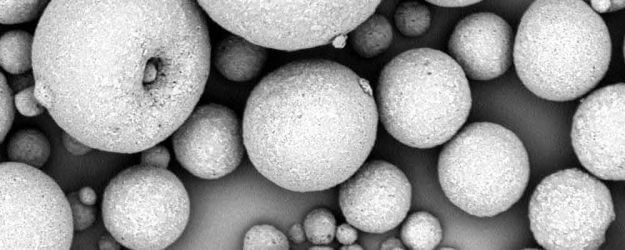
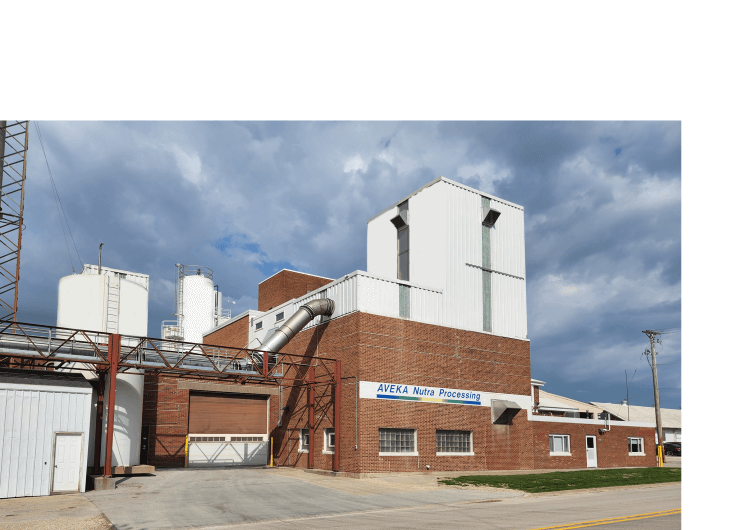
Most of the spray drying at AVEKA is done from aqueous solutions; however, AVEKA Inc has the cabapility for drying materials out of solvents. The appropriate safety and regulator precautions are taken, including running the material at a lowfeed rate that keeps the concentration of the solvent well below its lower explosion limit. | | Equipment | AVEKA Inc, the Woodbury Minnesota R&D and small to medium scale production facility, is equipped with a number of spray dryers that have 0.5 to 200 lbs. of drying capacity per hour. The batch size for the smallest dryers is typically 1-5 gallons of slurry, scaling up in the other dryers to about 2500 lbs. of slurry. These dryers typically produce particles with sizes ranging from 5-50 microns. One of the small dryers is located in the food processing suite and can produce food-grade samples for customers.
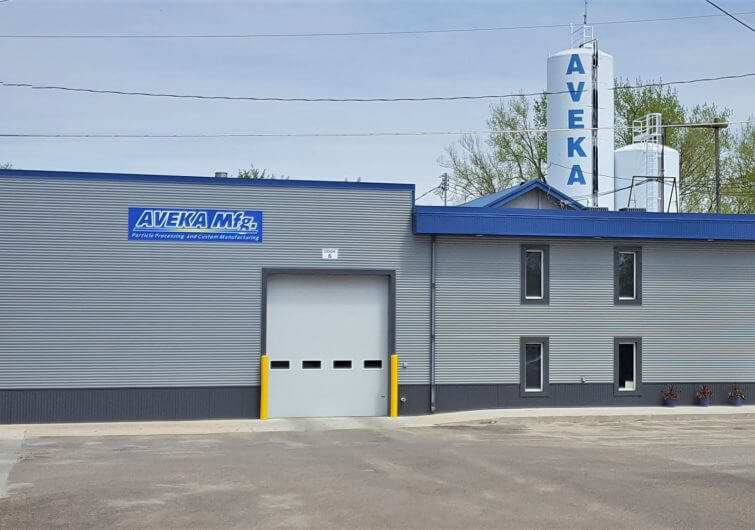
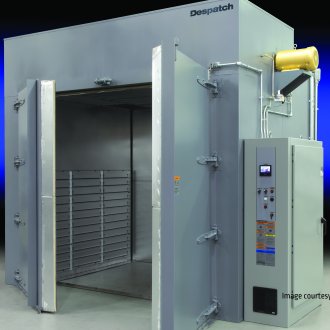
AVEKA Manufacturing, the large-scale manufacturing facility in Fredericksburg Iowa, is equipped with a Rogers Box Dryer with 3,200 pounds/hour of water drying capacity. Typical particle sizes range from 75-100 microns.
Cresco Food Technologies also has a Rogers Box Dryer for food processing that dries 4,500 pounds of water/hour. This system is ideal for drying food-grade materials including maltodextrin, yeast, soy milk, and food chemicals. | | Characterization | Horiba LA 950, LA 930 and LB 500, for measuring particle size distributions
Moisture Balance, Mettler LJ16 solids analyzer, TGA/DSC, and Karl Fischer for residual moisture measurements Learn more about out Characterization Capabilities |
back to top |
|