What are Alginate Beads?
Custom alginate beads and capsules engineered for performance, appearance, and controlled release.
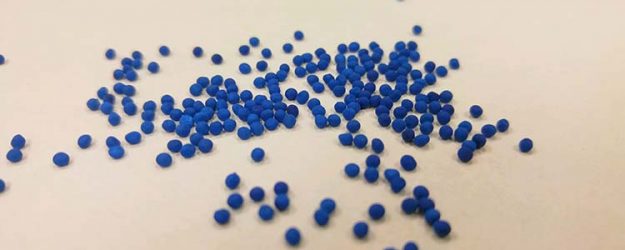
Alginate beads are versatile, biodegradable particles made from natural seaweed-derived polymers. They are widely used to encapsulate, protect, and deliver active ingredients across food, personal care, home care, industrial, and specialty applications.
At AVEKA, we design and manufacture custom alginate beads and core-shell capsules using advanced, scalable processes—helping you bring innovative particle-based products to market faster.
Why Choose Alginate Beads?
Alginate offers a unique combination of functionality and sustainability:
- Made from renewable, seaweed-based materials
- Biodegradable and environmentally friendly
- Stable at high temperatures
- Approved for food and cosmetic applications
- Highly customizable in size, strength, and release behavior
Alginate beads can be wet or dry, soft or hard, decorative or functional—depending on your product goals.
Alginate Encapsulation Options
Matrix Alginate Beads
Matrix beads contain the active material distributed throughout the bead structure.
Ideal for:
- Abrasives and pigments
- Powders and food ingredients
- Personal care actives
- Live bacteria and probiotics
Key benefits:
- Uniform distribution of ingredients
- High filler loading (up to 99wt%)
- Adjustable strength and particle size
Available as wet or dry beads, ranging from microns to millimeters.
Core-Shell Alginate Capsules
Core-shell capsules feature a defined outer alginate shell surrounding a liquid or solid core.
Ideal for:
- Fragrances and essential oils
- Edible and cosmetic oils
- Other hydrophobic liquids
Key benefits:
- Protects sensitive ingredients
- Enables controlled or triggered release
- Improves shelf-life and handling
Capsules can remain wet or be dried, with sizes typically ranging from 200 µm to 5 mm.
Controlled Release, Designed for Your Application
Alginate beads can be engineered to release their contents in multiple ways:
- Pressure: Capsules burst with gentle squeezing or higher force
- Abrasion: Beads smear or break down during use
- Chemical triggers: Beads dissolve or de-gel under specific conditions
- Diffusion: Slow, continuous release of fragrances or volatiles
We tailor each formulation to match your product’s performance requirements.
Typical Encapsulated Materials
Alginate beads can encapsulate a wide range of materials, including:
- Fragrances and oils
- Pigments and abrasives
- Powders and food additives
- Skin-conditioning agents
- Live bacteria and biological actives
Note: Fill materials must be compatible with aqueous processing.





More Processing Services