Spray Drying Services
Why Choose AVEKA?
-
Custom Particle Engineering: We don’t just dry your material; we precisely control particle size, morphology, and moisture content to engineer individual, value-added particles tailored to your exact specifications.
-
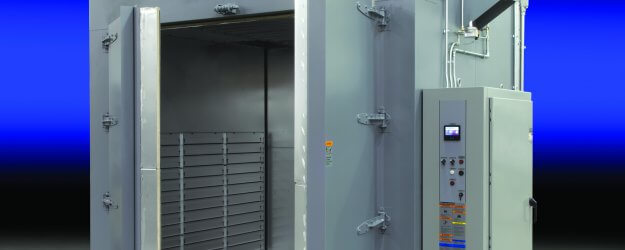
Scalable, Turnkey Infrastructure: With a fleet ranging from pilot-scale equipment (3 kg/hr) to massive industrial and food-grade horizontal box dryers (up to 2,000 kg/hr), we seamlessly support your project from initial R&D through high-volume commercial production.
-
Comprehensive Processing Ecosystem: Save time and minimize logistical headaches by leveraging our extensive pre- and post-processing capabilities, including liquid blending, homogenization, evaporation, screening, and custom packaging.
Q: What is Spray Drying?
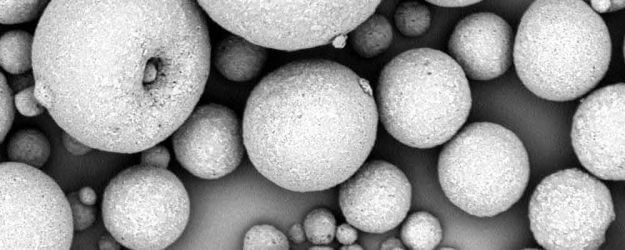
A: Spray drying is a continuous process used to manufacture free-flowing dry powders from a liquid feedstock. The liquid feedstock is atomized into a heated air stream where the droplets rapidly dry to form individual particles. Particle size, morphology, and moisture content can be controlled by adjusting dryer parameters, nozzle configuration, and feed properties. Spray drying is widely used across many industries and can efficiently dry commodity material as well as create value-added, designer particles.
Q: What equipment does AVEKA use for Spray Drying Services?
A: AVEKA utilizes both tower and horizontal box dryers equipped with two-fluid and hydraulic spray nozzles to process a variety of aqueous systems. Extensive pre- and post-processing capabilities contribute to the turnkey experience AVEKA provides.
Spray Drying Vs Fluid Bed Drying: When and Why to Use Each Blog Post
Challenges and Opportunities in Spray Drying Webinar
Spray Drying: Our Expertise in Particle Processing Services
Custom Solutions in Contract Manufacturing: Meeting the Unique Needs of Every Customer